Introduction
Tailored shorts have rocketed from beach‑only staples to everyday warm‑weather essentials, and inseam length sits at the heart of the new conversation about fit. For men deciding between the bold 5‑inch cut and the slightly longer 7‑inch option, that extra two inches may feel trivial on paper but can completely redraw the lines of comfort, confidence, and proportion. This article demystifies how inseam length shapes your silhouette, when each style shines, and why the answer to “Is a 5 or 7 inseam better?” will always depend on the unique combination of body type, personal taste, and occasion.
Understanding Inseam Length
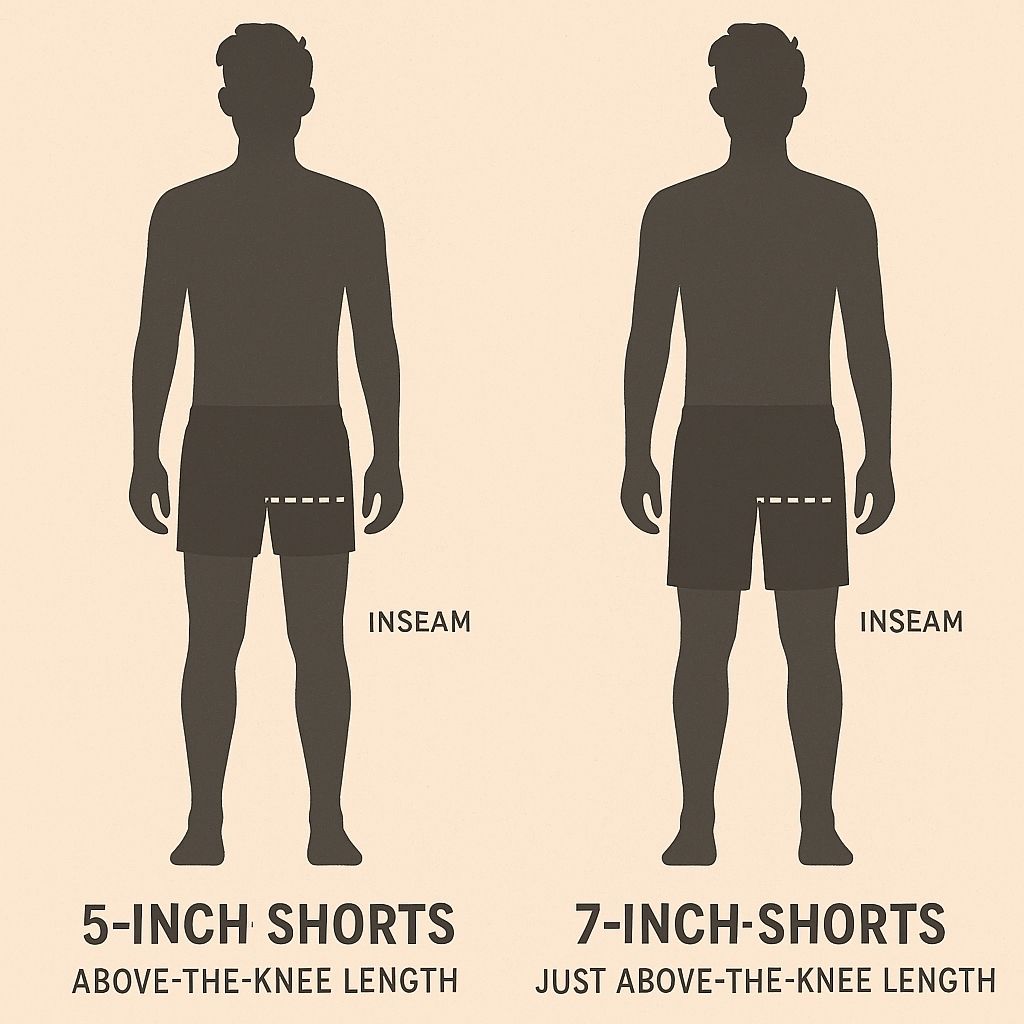
The inseam is the seam that runs from the crotch to the bottom hem along the inside of your shorts. Its measurement determines where the fabric stops on your leg—effectively framing your knees, quads, and calves in different ways.
The 5‑inch inseam sits several inches above the knee on most men, exposing more thigh and delivering a visually athletic vibe. Meanwhile, a 7‑inch inseam hovers just above—sometimes brushing—the kneecap, giving a modest yet tailored profile that feels timeless rather than daring. Those two inches influence not only how much skin shows but also how the overall line of your legs meets your torso, subtly altering perceived height and proportions.
Historically, men’s shorts have swung across a spectrum: ultra‑short styles dominated 1970s gyms, while the 1990s favored knee‑grazing cargos. Inseams began shortening again during the 2010s athleisure boom, paving the way for today’s balanced 5‑ and 7‑inch sweet spots. Both lengths now coexist, offering men a range between retro bravado and modern refinement.
Style Considerations by Body Type
Selecting shorts is much like choosing a blazer: fit should enhance—not overwhelm—your natural frame. Taller men (around 6’1″ or above) often find 5‑inch shorts a playful way to break up long legs, injecting a dynamic, sporty edge that prevents outfits from feeling bottom‑heavy. Shorter or average‑height men may prefer 7‑inch shorts because the slightly longer line can lengthen the torso‑to‑leg ratio, creating a balanced silhouette without looking cropped.
Leg proportion and musculature matter too. If your quadriceps are well defined from running or cycling, a 5‑inch inseam highlights that athletic shape, especially with tapered leg openings that avoid flare. Conversely, if you favor a slimmer profile or want less thigh exposure, the 7‑inch maintains polish while still showcasing subtle muscle definition.
For overall outfit harmony, remember that more exposed leg means visually “lighter” bottoms. A 5‑inch inseam pairs well with slimmer low‑top sneakers, minimal espadrilles, or even barefoot beach strolls. A 7‑inch inseam accepts chunkier footwear—think retro trainers or nappa‑leather loafers—because the extra fabric balances heavier shoes.

Occasions and Practical Use
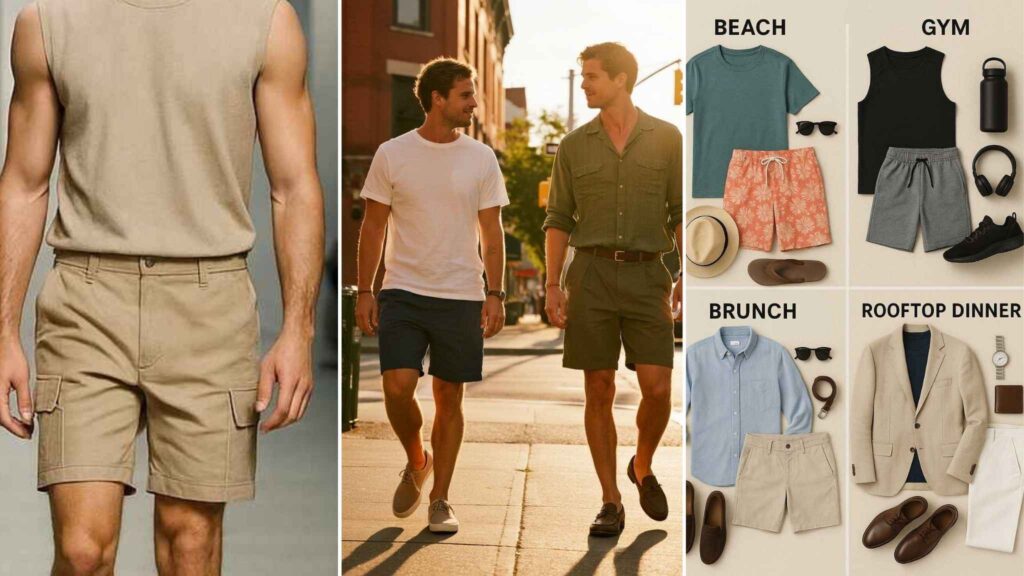
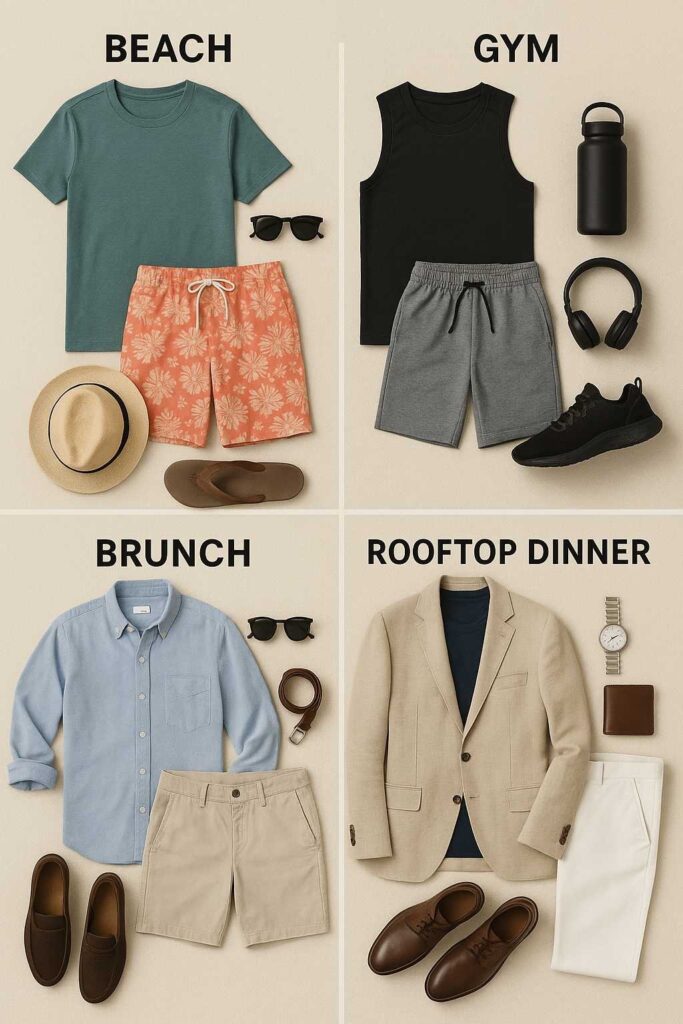
Not every setting welcomes the same inseam. Commuting to a creative office on a humid day? A 7‑inch chino short with a tucked Oxford shirt nails business‑casual ingenuity. Sprinting down the shoreline or playing pickup beach volleyball? The 5‑inch swim trunk keeps fabric out of the way and dries faster thanks to less material.
Casual weekend brunches split the difference: an earth‑tone 7‑inch short projects relaxed sophistication with a polo and suede moccasins, whereas a pastel 5‑inch number leans breezy when coupled with a camp‑collar shirt and white canvas kicks. Smart‑casual evening events—think rooftop bars or al fresco dinners—typically favor the extra coverage of a 7‑inch inseam, especially when layered with an unstructured blazer.
Shoe and top coordination matters too. Shorter inseams shine with no‑show socks and low‑profile shoes, while longer inseams comfortably integrate crew socks, grain‑leather slip‑ons, or even dressier desert boots.
Current Fashion Trends and Influences
Celebrity style continues to champion versatile inseams. Pro athletes flash 5‑inch tailored shorts at press conferences, spotlighting toned legs, while film stars favor 7‑inch linen blends for festival red carpets, striking a balance between informal and sharp. Social media influencers promote both lengths by color‑blocking—fiery reds or citrus yellows for 5‑inch, muted sages or sand tones for 7‑inch—pushing men to experiment beyond safe navy and black.
Climate matters: tropical regions like Southeast Asia and the Caribbean naturally gravitate toward 5‑inch shorts for ventilation, while temperate cities may reserve shorter cuts for high‑summer heatwaves. Cultural norms add nuance: European resort towns consider a 5‑inch inseam chic, whereas some conservative locales still lean longer for modesty.
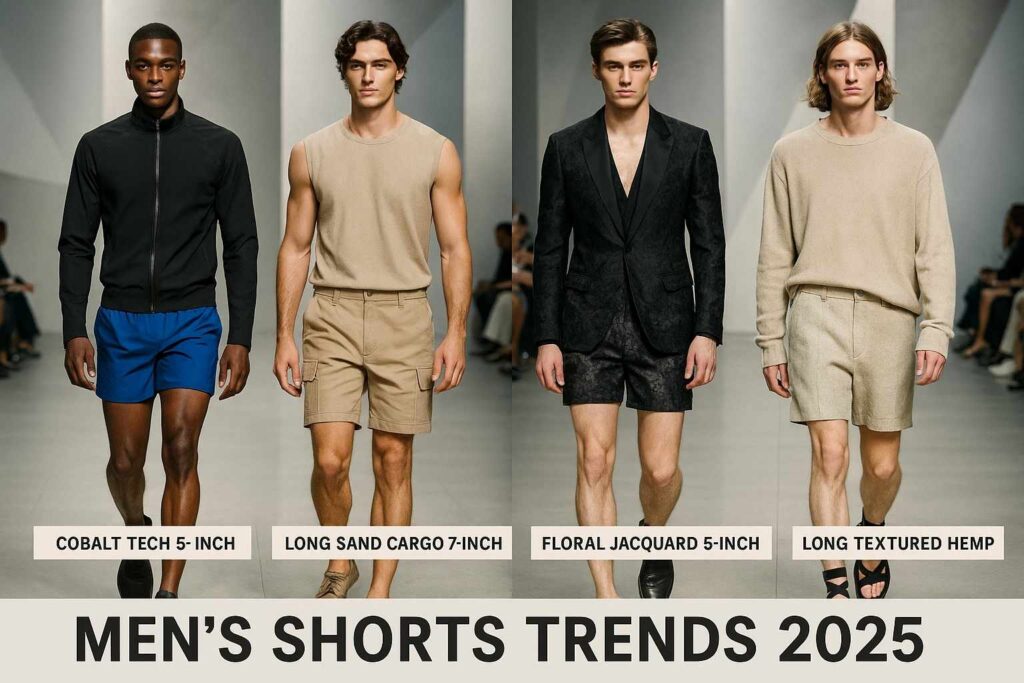
Looking at 2025, designers have introduced technical fabrics—recycled nylon blends, quick‑dry twills, stretch organic cotton—that appear in both inseam lengths. Expect bolder patterns such as tonal jacquard florals and micro‑geometric prints on 5‑inch cuts, while understated textural weaves dominate 7‑inch offerings. Cargo pockets continue trending but in slimmer silhouettes, allowing both lengths to merge function with fashion.
How to Choose the Right One for You
Use the following checklist when standing in the fitting room or browsing online:
- Comfort: Sit, squat, and stride. The hem should not ride uncomfortably high or pull across your thighs.
- Fit: Check that leg openings neither balloon nor constrict; they should follow your natural leg line.
- Purpose: Will you be lounging poolside, sprinting trails, or dining at a patio restaurant? Match length to activity.
- Confidence: Your comfort level with showing thigh skin is paramount. A confident walk outranks any trend.
- Proportion: Balance shorter shorts with lighter shoes and tapered tops; pair longer shorts with structured shirts or layers.
Ideally, own at least one quality pair in each inseam. A 5‑inch in a playful hue (sun‑washed coral) becomes your summer statement, while a 7‑inch in a neutral (stone gray) anchors countless smart‑casual looks. Experiment with textures—seersucker, stretch denim, Tencel blends—to add depth. Patterns such as vertical stripes can elongate legs in a 5‑inch, while a subtle herringbone elevates a 7‑inch for evening wear.
Remember, tailoring is not limited to suits. A local alterations shop can hem or taper off‑the‑rack shorts to your perfect length and width, ensuring both 5‑ and 7‑inch options feel custom.
Conclusion
Choosing between a 5‑inch and 7‑inch inseam is less about right or wrong and more about aligning your clothes with your proportions, activities, and personality. The 5‑inch offers sporty bravado and freedom of movement, while the 7‑inch delivers classic versatility and modest coverage. By understanding how each length interacts with your body type, occasions, and prevailing trends, you transform shorts from an afterthought into a deliberate style tool. Try both, tailor as needed, and wear them with confidence—because the best inseam is the one that makes you feel unmistakably you.